
Is it legal?
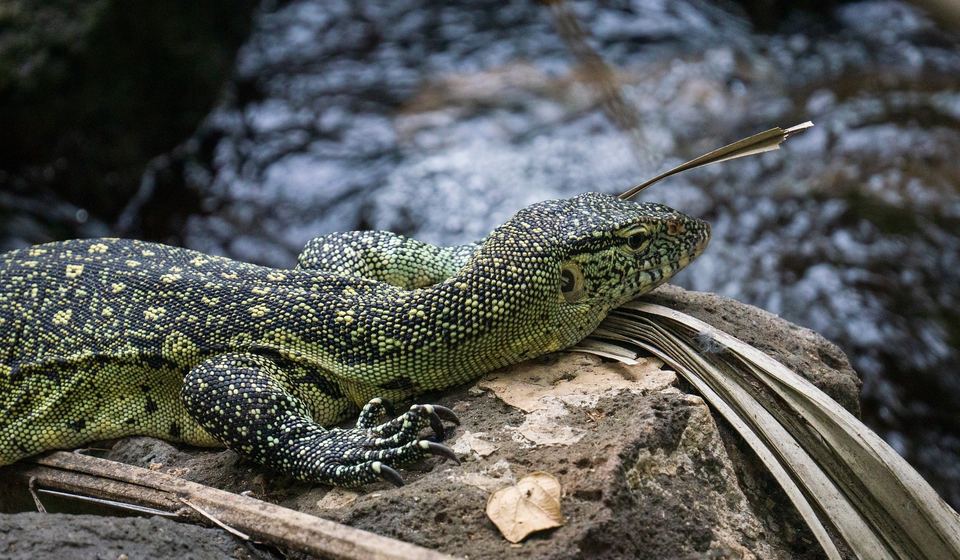
Monitor rules vary a lot by species. Nile monitors are prohibited in Florida, and several states restrict water monitors or monitors in general. Colorado allows monitors without a license only if the species is native only to the tropics and subtropics. The checker below shows the general rule for other monitors, and each species guide has its own.
Not legal advice. Use the full checker for more species and states.
Pick a species
These are the four monitors we have full guides for. Sizes and temperaments differ a lot, so compare them before you buy.
| Species | Adult size | Difficulty | Legal notes |
|---|---|---|---|
| Ackie monitor | 20–28 in | Intermediate | Allowed in most states. Colorado depends on native range |
| Savannah monitor | 2.5–4 ft | Intermediate | Restricted in some states, such as New Jersey and Rhode Island |
| Nile monitor | 4–6 ft | Expert | Prohibited in Florida. Restricted in Georgia, New York and others |
| Asian water monitor | 5–8 ft | Expert | Restricted in Iowa, New York and others |
Most monitors sold as cute babies grow far beyond what a casual keeper can house. If you are new to monitors, start with an Ackie or a savannah monitor.
What every monitor needs
- Very hot basking: Basking surface temperatures of 130–160°F, with a cooler side to escape to.
- Strong UVB: A linear T5 HO tube over the basking area, replaced every 6–12 months.
- Deep digging substrate: At least 8 to 12 inches for smaller species.
- A secure enclosure: Monitors are strong, smart and good at escaping.
- Patient, regular handling: Monitors can learn to tolerate people, but they need time.
- A varied diet: Insects for small species and whole prey for large ones. Avoid overfeeding.
Rules to check first
Monitors are among the most heavily regulated reptile groups. A species that is legal in one state can be banned next door.
- Use the legal checker and pick the exact species.
- Many states restrict large or "dangerous" monitors, and some ban the whole family.
- Some cities and counties have their own rules.
- Never release an unwanted monitor. Escaped and released Nile monitors are now established in parts of Florida.
Be honest about adult size
Water monitors and Nile monitors are not pets for most homes. They need a room-sized enclosure, a large pool and a keeper who is ready for decades of care. Rescues are full of oversized monitors that were bought as babies.
Care figures reflect common keeper practice and vary by animal and home. Reviewed by the Lantern Keeper. Not veterinary or legal advice.