
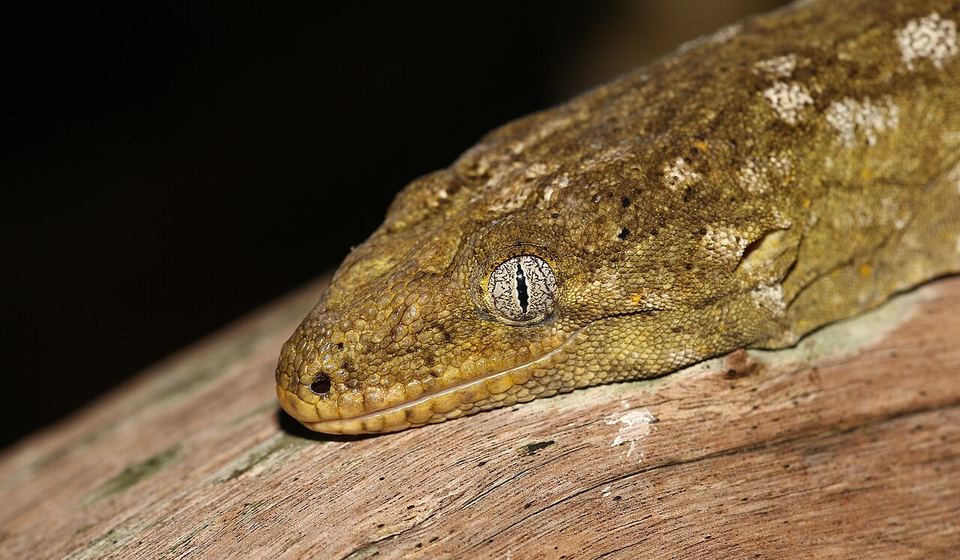
Is it legal?
Leachianus geckos are not on California's restricted list. They are protected in the wild, so only buy captive-bred animals from a breeder. Colorado's new rules list the gecko family that includes leopard geckos, and we could not confirm leachianus geckos are covered. Local laws vary, so check the state pages.
Not legal advice. Use the full checker for more species and states.
Enclosure
Leachianus geckos are heavy, active climbers. Plan for the adult size from the start.
| Juvenile | 12×12×18 in tall enclosure |
|---|---|
| Sub-adult | 18×18×24 in |
| Adult (one gecko) | 24×18×36 in is a minimum. 24×24×48 in is better |
- Front-opening, strong and tall. Adults are heavy and push on doors.
- One gecko per enclosure. Never house adults together.
- Ventilation: Plenty of screen, so the air does not stay stale.
- Lid: Secure it. Large adults are strong.
Temperature
Leachianus geckos do best slightly cooler than other geckos at night.
| Daytime | 72–78°F |
|---|---|
| Night | 65–72°F |
| Danger zone | Above 82°F for long periods. They overheat easily |
- No heat lamp needed in most homes.
- Keep it cool in summer. Heat stress is the biggest risk. Avoid sun and warm rooms.
- Measure it: Digital probe thermometer or an infrared temperature gun.
Humidity
Aim for 60–80% humidity after misting, drying to about 50% between mistings.
- Mist well once a day in the evening.
- Use a digital hygrometer.
- Plenty of airflow stops mold and bacteria from building up.
Hides and decor
- Thick branches and cork rounds: They are heavy and need sturdy perches.
- Large hides: Both low and high in the enclosure.
- Foliage: Use dense plants to cover the back and sides. Large leaves hold water droplets.
- Vertical space: They like to rest high up in the corner or on a branch.
Substrate
Use a substrate that holds some moisture but never stays wet.
| Good choices | Coconut fiber (coir), 2 inches deep, or paper towels |
|---|---|
| Okay | Bioactive mix with live plants and cleanup insects |
| Avoid | Loose sand, gravel, cedar and pine |
- Spot-clean droppings daily and replace substrate every month or two.
Feeding
Leachianus geckos eat a complete powdered diet and larger insects. Adults also take the occasional pinky mouse.
| Juvenile | Fresh gecko diet 3 times a week, with small insects weekly |
|---|---|
| Adult | Fresh gecko diet 2 or 3 times a week, with large insects weekly, and an occasional pinky mouse |
- Complete gecko diet: A thick paste in a low dish. Remove old food after a day.
- Insects: Gut-loaded dubia roaches, large crickets and hornworms, dusted with calcium.
- Mice: A thawed pinky once a month is a treat for adults, not a staple.
- Water: Mist for drinking, and offer a heavy shallow water dish.
Handling and behavior
- Leachianus geckos can be shy or defensive. Many calm down with patient, regular handling, but some stay bitey.
- A bite from an adult can draw blood and the gecko may hold on. Stay calm and wait for it to let go.
- Keep sessions short. Support the whole body, since a dropped one can hurt itself.
- Never grab by the tail.
- Geckos in this family can drop their tails when stressed. The tail does not grow back, so handle calmly and keep sessions short.
Common health problems
- Metabolic bone disease: from poor diet or low calcium.
- Heat stress: panting, lethargy. Move to a cooler room and call a vet.
- Stuck shed: on toes and the tail tip.
- Respiratory infection: from cold, damp, stale air.
- Parasites: have a vet test a fecal sample, since many wild lines carry them.
- Obesity: from too many insects or mice.
Find an exotic-animal vet before you need one.
Common mistakes
- Underestimating adult size and housing a giant in a tiny cage.
- Too much heat.
- Buying a wild-caught animal. Wild populations are protected, so always choose a captive-bred gecko from a breeder.
- Expecting a tame lap pet.
- Grabbing the tail.
- Housing two together.
Gear and cost
Expect to spend roughly $300–700 on an adult setup. The gecko itself usually costs $300–1,000 or more, depending on the line.
- Large tall front-opening enclosure (24×18×36 in or larger)
- Digital thermometer and hygrometer
- Sturdy branches, large foliage and hides
- Coir substrate and a spray bottle
- Complete gecko diet, calcium and large insects
See the full leachianus gecko setup guide →
Shopping links are on the setup guide. Some may become affiliate links, which would earn Lantern Reptiles a commission at no extra cost to you.
Quick answers about the leachianus gecko
How big does a leachianus gecko get?
An adult leachianus gecko is typically 12–14 in long and weighs 250–450 g. Individuals vary.
How long does a leachianus gecko live?
Leachianus geckos usually live 20+ years with good care, so it is a long commitment.
Is a leachianus gecko good for beginners?
We rate the leachianus gecko as: intermediate. It is better suited to a keeper with some experience. Read the full guide before you decide.
Does a leachianus gecko need UVB lighting?
UVB: optional, low level. Use a proper reptile UVB tube, replaced on the maker schedule.
What does a leachianus gecko eat?
Powdered gecko diet, insects, occasional mice. See the feeding section of this guide for how often and how much.
What size enclosure does an adult leachianus gecko need?
24×18×36 in is a minimum. 24×24×48 in is better.
Is it legal to own a leachianus gecko?
It depends on your state. Use our legal checker or the state-by-state laws. Cities, counties and landlords can add their own rules.
Care figures reflect common keeper practice and vary by animal and home. Reviewed by the Lantern Keeper. Not veterinary or legal advice.