
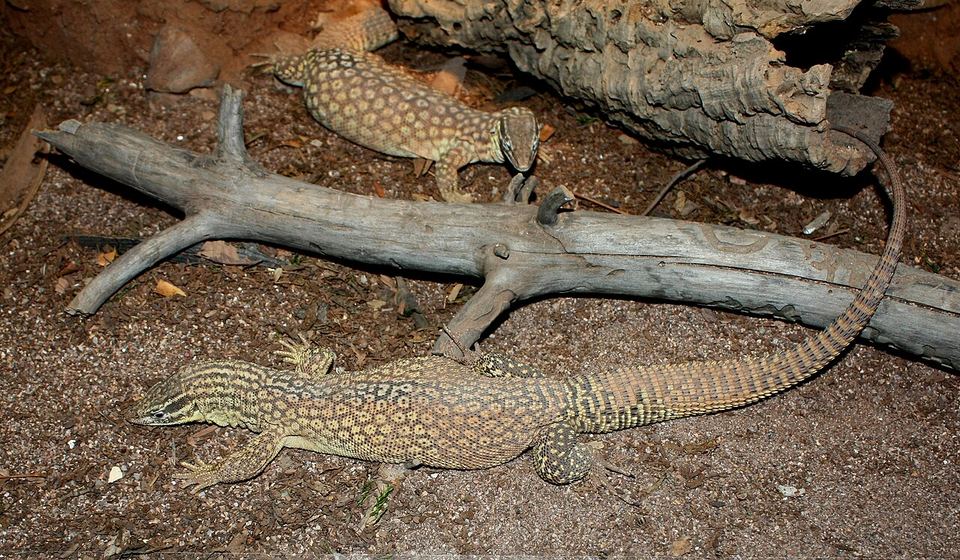
Enclosure
Ackies dig and need floor space. 4×2×2 ft is the usual adult minimum, and PVC holds heat best.
DIY sealed plywood enclosure
Many keepers build a sealed wood enclosure to size. Plans are available online.
Find the maker →Basking lamp
Ackies need a very hot basking spot, around 140–160°F at the surface. Use a high-wattage bulb in a ceramic dome, out of reach.
Fluker’s basking spot bulb + dome fixture
Simple basking bulb. Pick the wattage that reaches your target surface temperature.
Shop on Amazon →Zoo Med Repti Basking Spot lamp + dome fixture
Popular, easy to find in several wattages.
Shop on Amazon →Exo Terra daylight basking spot + dome fixture
Matching bulb and fixture. Use a ceramic-socket dome.
Shop on Amazon →UVB lighting
Monitors need strong UVB over the basking area. Linear T5 HO tubes or self-ballasted mercury vapor bulbs are common.
Zoo Med ReptiSun T5 HO UVB tube + fixture
Linear T5 HO tube over the basking area.
Shop on Amazon →Zoo Med PowerSun UV mercury vapor bulb
Combined heat and UVB in one bulb. Must be used at the right distance.
Shop on Amazon →Arcadia ProT5 HO UVB tube + fixture
Premium linear UVB with a strong reputation among keepers.
Shop on Amazon →Thermostat
A thermostat or dimmer keeps the hot spot from running too hot. Confirm it is rated for your bulb.
Inkbird on/off thermostat
A well-known mid-priced controller that works with ceramic emitters and heat bulbs.
Shop on Amazon →Herpstat thermostat
Proportional control with multiple probes. Popular with serious keepers.
Shop on Amazon →Thermometers and humidity
You need to see the numbers. Check the surface hot spot, the cool side and the humidity.
Exo Terra digital thermometer and hygrometer
Simple gauge that shows temperature and humidity.
Shop on Amazon →Etekcity Lasergrip 774 infrared thermometer
Infrared temp gun for checking the surface hot spot. Widely sold by reptile shops.
Shop on Amazon →Zoo Med digital terrarium thermometer
Probe thermometer for tracking the cool side day and night.
Shop on Amazon →Hides, water bowl and decor
A burrow or hide on each side, a flat basking rock and a shallow water dish.
Bedding
Ackies dig burrows. Use a deep soil and sand mix.
Feeding
Ackies eat mainly insects. Dubia roaches and crickets are common staples, dusted with calcium.
Dubia roaches and crickets
Dubia roaches are a popular staple. Josh’s Frogs is a well-known source.
Find the maker →Feeding tongs and a bowl
Tongs for offering prey and a shallow dish for greens or insects.
Shop on Amazon →Calcium and supplements
Dust food with calcium as the care guide describes. Check whether the product has vitamin D3 and match it to your lighting.
← Back to the ackie monitor care guide
Setup picks reflect common keeper practice and vary by animal and home. Not veterinary or legal advice.