
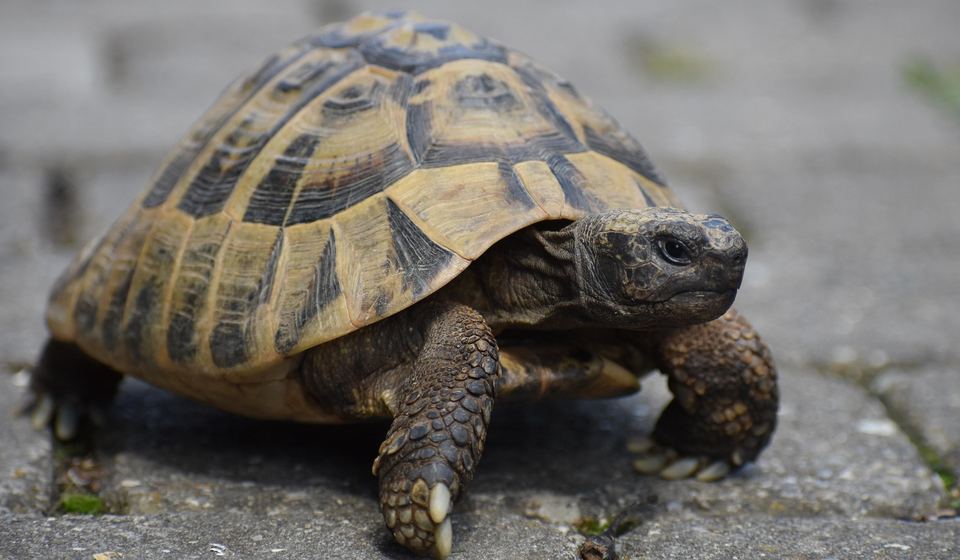
Is it legal?
Hermann's tortoises are not restricted by California or Florida. Colorado's new rules appear to leave them off the allowed list, because they are native outside the tropical zone Colorado allows. Check the Colorado result and confirm with CPW before buying.
Not legal advice. Use the full checker for more species and states.
Housing
| Hatchling | 2×2 ft tub or table |
|---|---|
| Juvenile | 3×2 ft table |
| Adult | 4×2 ft is the usual minimum. 6×3 ft or an outdoor pen is better |
- Secure walls: Tortoises climb and push. Use solid sides that are tall enough that they cannot see over or climb out.
- Not a glass tank: Tortoises try to walk through glass and stress themselves. Use an open-top "tortoise table" or a pen.
- Outdoor time: Natural sun is the best UVB. Use a secure pen with a covered area when the weather is warm.
Temperature
| Basking surface | 90–95°F |
|---|---|
| Warm side (air) | 75–85°F |
| Cool side | 70–75°F |
| Night | Not below about 65°F indoors |
- Basking: A basking lamp over a flat rock or tile on one side, with a cool side for escape.
- Thermostat or dimmer: Control every heat source. Measure with an infrared temperature gun on the basking surface and a digital probe for air.
- Night: Use a ceramic heat emitter or a heated shelter if your home drops below the night range.
UVB lighting
Tortoises need UVB to make vitamin D and use calcium. Without it their shells soften and deform.
- Use a linear T5 HO UVB tube (often 10–12%, or the product's recommended strength for tortoises) that covers the basking area.
- Mount it at the distance the manufacturer recommends and replace it every 6–12 months, even if it still glows.
- Use a timer for 10–12 hours of light a day. Natural sunlight outdoors is better, as long as there is shade and the tortoise can walk away from the heat.
Humidity
Keep the enclosure dry to moderate, around 40–60% humidity. Hatchlings do better at the upper end, with a humid hide.
- Provide places to dig and hide.
- Avoid constant dampness, which causes respiratory infections.
- Hatchlings that stay too dry are prone to pyramiding.
Substrate
| Good choices | Topsoil and coconut coir mix with orchard grass hay mixed in, 3–4 inches deep |
|---|---|
| Okay | Coconut coir alone |
| Avoid | Loose sand alone, cedar and pine, walnut shell |
Feeding and water
Hermann's tortoises eat a diet of grasses and weeds that is high in fiber and low in sugar.
| Mostly | Dandelion, plantain weed, clover, hibiscus leaves, grass hay, collard and mustard greens |
|---|---|
| Sometimes | A small amount of squash or other vegetables |
| Avoid | Fruit, spinach and iceberg lettuce, high-protein food |
- Calcium: Offer a cuttlebone and dust food lightly with calcium powder.
- Water: Provide a shallow dish and soak 2–3 times a week for young tortoises.
- Hibernation: In the wild, they hibernate in winter. Do not hibernate a tortoise unless it is healthy and a reptile vet has helped you plan it.
Handling
- Hermann's tortoises are usually calm and handle well in short sessions.
- Hold with two hands low over a soft surface.
- Wash your hands before and after handling.
Common health problems
- Respiratory infection: runny nose, bubbles or wheezing. Often from cold or damp conditions.
- Shell rot and pyramiding: from poor humidity management or diet.
- Metabolic bone disease: from low UVB or calcium.
- Parasites: have a vet test a fecal sample.
- Overgrown beak or nails: a vet can trim them.
Find an exotic-animal vet before you need one.
Common mistakes
- No UVB or a UVB tube that has not been replaced.
- Keeping the enclosure too humid or too dry.
- Feeding fruit and vegetables instead of weeds.
- Glass tank housing.
- Hibernating a sick or underweight tortoise.
Gear and cost
Expect to spend roughly $300–700 on a full setup. A tortoise costs about $150–500.
- Large tortoise table with deep substrate
- T5 HO UVB tube, basking lamp, thermostat
- Infrared temperature gun and hygrometer
- Hide, humid hide, water dish
- Calcium, cuttlebone, weed seeds or greens
See the full hermann's tortoise setup guide →
Shopping links are on the setup guide. Some may become affiliate links, which would earn Lantern Reptiles a commission at no extra cost to you.
Quick answers about the hermann's tortoise
How big does a hermann's tortoise get?
An adult hermann's tortoise is typically 5–8 in long and weighs 1–4 lb. Individuals vary.
How long does a hermann's tortoise live?
Hermann's tortoises usually live 50–75 years with good care, so it is a long commitment.
Is a hermann's tortoise good for beginners?
We rate the hermann's tortoise as: intermediate. It is better suited to a keeper with some experience. Read the full guide before you decide.
Does a hermann's tortoise need UVB lighting?
UVB: required. Use a proper reptile UVB tube, replaced on the maker schedule.
What does a hermann's tortoise eat?
Weeds and greens. See the feeding section of this guide for how often and how much.
What size enclosure does an adult hermann's tortoise need?
4×2 ft is the usual minimum. 6×3 ft or an outdoor pen is better.
What temperature does a hermann's tortoise need?
Basking surface: 90–95°F. Use a thermostat and a digital thermometer, and give the animal a cooler area to move to.
Is it legal to own a hermann's tortoise?
It depends on your state. Use our legal checker or the state-by-state laws. Cities, counties and landlords can add their own rules.
How much does a hermann's tortoise setup cost?
Expect roughly $300–700 for a full setup, not counting the animal. See the setup guide for budget, standard and premium gear.
Care figures reflect common keeper practice and vary by animal and home. Researched by Lantern Reptiles and checked against veterinary and keeper sources. Not veterinary or legal advice.